
Industrial Wastewater Treatment Systems: 2026 Compliance & Turnkey Solutions
HEI (Hoffland Environmental) delivers cutting-edge industrial wastewater treatment systems designed to meet 2026 EPA discharge limits while enabling maximum water reuse. Our turnkey solutions focus on achieving 4 parts per trillion (ppt) PFAS removal, 95-99% water recovery via Zero Liquid Discharge (ZLD), and 30-40% energy reduction. We provide professional engineering for the treatment of heavy metals, organic compounds (BOD/COD), oils, and emerging contaminants like 1,4-dioxane.
What Are Industrial Wastewater Treatment Systems?
An industrial wastewater treatment system is a specialized facility designed to remove contaminants from manufacturing process water before it is discharged or reused. Unlike standard municipal systems, these facilities are engineered to handle high concentrations of chemicals, heavy metals, and “forever chemicals” (PFAS).
Modern systems by HEI are built for sustainability, transforming waste into reusable water and valuable resources through advanced industrial water treatment processes.
- Suspended Solids Removal
- Chromate Reduction > See Treatment information
- Hydroxide Precipitation of Metals > See Treatment information
- Cyanide Oxidation > See Treatment information
- Anaerobic Treatment
- Produced Water
- Oil Sludge Remediation > See Oil / Water Separators
- Solids Compaction
- Solids Drying > See Sludge Dryers
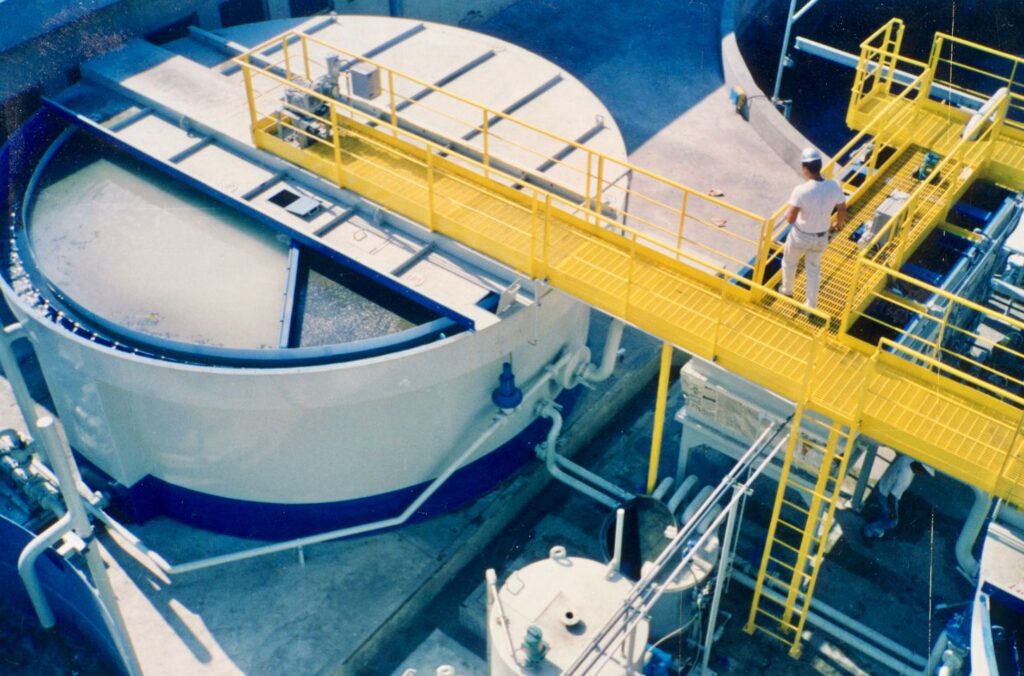
HEI custom designs the systems, manufactures the equipment, installs and commissions the process. Systems have been installed varying in sizes from batch treatment plants of treating 2,000 gallons per week to large integrated systems processing 6,000 gpm, totaling 4,000,000 gallons per day.
HEI also designs and fabricates process control systems. The custom controlled equipment varies in complexity from simple control relay logic panel to SCADA control with remote programming and monitoring from HEI engineering office in Conroe, Texas.
HEI is bondable by treasury rated surety and maintains professional liability insurance.
Key Components of Wastewater Treatment Plants
To ensure 100% compliance and operational reliability, an industrial wastewater plant integrates several high-performance mechanical and chemical units. HEI manufactures these components in-house to guarantee quality:
2026 Regulatory Landscape: What’s Driving Change
New EPA requirements and emerging contaminant regulations are reshaping industrial wastewater treatment:
- PFAS “Forever Chemicals”: EPA drinking water limits now at 4 parts per trillion (ppt) for PFOA/PFOS. CERCLA hazardous substance designation creates direct liability for industrial dischargers. Read: PFAS Treatment Solutions
- Zero Liquid Discharge Mandates: Water-stressed regions and concerns about PFAS are driving industries toward 100% water recovery systems, which eliminate liquid discharge.
- 1,4-Dioxane Limits: New state regulations require monitoring and treatment of this emerging contaminant in industrial wastewater.
- Energy Efficiency Requirements: Carbon reduction policies targeting 30-40% energy reduction in treatment operations by 2030.
- Water Reuse Incentives: Regulatory frameworks encouraging closed-loop industrial water systems and reuse applications.
The Bottom Line: Compliance strategies that worked in 2020 are insufficient for 2026. Modern industrial wastewater systems must address emerging contaminants, achieve higher recovery rates, and operate more efficiently.
Comprehensive Treatment Technologies
Advanced Solutions for 2026
PFAS Removal & Destruction Systems
Critical for industries using fluorinated compounds, fire suppression systems, or manufacturing processes involving PFAS.
Our Approach:
- Advanced Membrane Filtration: Reverse osmosis (RO), nanofiltration (NF), and ultrafiltration (UF), achieving 99.9% PFAS capture
- Granular Activated Carbon (GAC): Long-chain PFAS adsorption with regeneration systems
- Ion Exchange Resins: Selective PFAS removal to meet 4 ppt discharge limits
- Plasma Destruction Technology: 99.99% PFAS mineralization for complete elimination
- Zero Liquid Discharge Integration: Concentration and safe solid waste disposal
Industries Served: Semiconductor manufacturing, chemical production, firefighting training facilities, landfill leachate, textile operations
→ Learn more about Reverse Osmosis Membrane Systems
Zero Liquid Discharge (ZLD) Systems
The industrial wastewater treatment standard for water-scarce regions and strict discharge environments.
System Components:
- Multi-stage pretreatment (softening, filtration, organics removal)
- Membrane concentration (RO/NF achieving 95%+ water recovery)
- Thermal evaporation and crystallization
- Solid salt recovery for reuse or disposal
Benefits:
- 95-99% water recovery for complete reuse
- Eliminates discharge permit requirements and fees
- PFAS and heavy metal liability protection
- Resource recovery (industrial salts, metals)
- 2-4 year ROI in water-stressed regions
Applications: Power generation, chemicals, pharmaceuticals, semiconductors, oil & gas produced water
→ Explore Engineered Turnkey Systems
AI & IoT Smart Monitoring Systems
Modern industrial wastewater treatment requires precision control and predictive capabilities.
Technology Integration:
- Real-Time Quality Monitoring: IoT sensors tracking pH, TSS, COD, BOD, metals, and PFAS continuously
- Predictive Maintenance: Machine learning algorithms predicting equipment failures 72 hours in advance
- Automated Chemical Dosing: AI optimization reducing coagulant and polymer usage by 20-30%
- Energy Optimization: Adaptive control reduces aeration energy consumption by 30%
- Remote SCADA: Cloud-based monitoring and control from HEI’s Conroe, Texas, engineering center
Result: 15-35% operating cost reduction with 99%+ uptime reliability
Membrane Bioreactor (MBR) Systems
High-quality effluent for direct reuse applications in compact footprints.
- 50% smaller footprint vs. conventional activated sludge
- Superior effluent quality: TSS <5 mg/L, BOD <5 mg/L consistently
- Direct reuse quality: Suitable for cooling towers, boilers, and process makeup
- Shock load resistant: Handles variable industrial wastewater flows
- 38% market adoption in new industrial installations
Advanced Oxidation Processes (AOPs)
For complex organics and persistent contaminants requiring destruction.
Technologies:
- UV/H₂O₂ systems for 1,4-dioxane treatment
- Ozone oxidation for COD reduction
- Electrochemical oxidation for persistent organics
- Fenton reactions for cost-effective treatment
Core Industrial Wastewater Treatment Processes
Heavy Metal Removal & Recovery
Specialized treatment for metal finishing, electronics, mining, and manufacturing wastewater.
Treatment Methods:
- Hydroxide Precipitation: Copper, nickel, zinc, cadmium removal to <0.1 mg/L → View Hydroxide Precipitation Details
- Chromate Reduction: Cr(VI) to Cr(III) conversion and precipitation → View Chromate Reduction Systems
- Sulfide Precipitation: Ultra-low discharge limits for heavy metals
- Metal Recovery: Electrowinning for copper, nickel, and precious metals reuse
Cyanide Treatment
Two-stage oxidation systems for complete cyanide destruction in metal finishing and mining operations.
- Alkaline chlorination achieving <0.2 mg/L total cyanide
- Hydrogen peroxide oxidation for cyanide destruction
- Automated pH control and ORP monitoring
- Batch and continuous treatment configurations
→ View Cyanide Oxidation Methods
Suspended Solids Removal
High-efficiency clarification for clean effluent discharge.
Equipment:
- Inclined Plate Clarifiers: Lamella separators achieving 80-95% TSS removal → View Inclined Plate Clarifier Technology
- Dissolved Air Flotation (DAF): Oil, grease, and fine solids removal → View DAF Design Criteria
- Belt Filter Presses: Continuous sludge dewatering → View Filter Press Solutions
- Sludge Thickeners: Gravity and mechanical concentration → View Sludge Thickening Systems
Oil/Water Separation
Complete hydrocarbon removal from industrial wastewater and stormwater.
- API separators for free oil removal (10,000+ ppm to <100 ppm)
- Coalescing plate separators for emulsified oils
- Induced gas flotation (IGF) systems
- Produced water treatment for oil & gas operations
- Oil sludge remediation systems
→ View Oil/Water Separator Designs
Biological Treatment
Organic load reduction for food processing, chemical, and pharmaceutical wastewater.
- Anaerobic Treatment: High-strength organics with methane recovery for energy
- Aerobic Systems: Activated sludge, sequencing batch reactors (SBR)
- Moving Bed Biofilm Reactors (MBBR): Compact, shock-resistant systems
- Nutrient Removal: Biological nitrogen and phosphorus reduction
Sludge Management & Resource Recovery
Modern sludge treatment focuses on volume reduction and resource recovery.
- Thermal Drying: 90% moisture reduction, cutting disposal costs by 70% → View Sludge Drying Technology
- Mechanical Dewatering: Belt presses and centrifuges for continuous processing
- Biosolids Treatment: Advanced thermal methods for regulatory compliance
- Nutrient Recovery: Nitrogen and phosphorus extraction as fertilizer products
Polymer Feed & Mixing Systems
Optimized chemical addition for maximum treatment efficiency.
- Automated polymer preparation systems
- In-line static mixers for instant dispersion
- AI-controlled dosing based on real-time water quality
- 20-30% chemical cost reduction vs. manual dosing
Industry-Specific Solutions
Semiconductor Manufacturing
Challenge: Short-chain PFAS in fabrication wastewater, ultrapure water requirements. Solution: Multi-stage NF/RO with ZLD and plasma PFAS destruction, closed-loop water recovery, achieving water-positive facilities
Pharmaceutical & Chemical
Challenge: High COD/BOD, active pharmaceutical ingredients (APIs), complex organics. Solution: Anaerobic pretreatment + MBR + advanced oxidation, ZLD for high-salt waste streams
Metal Finishing & Electroplating
Challenge: Hexavalent chromium, cyanide, heavy metals, RCRA F006 waste. Solution: Chromate reduction, cyanide oxidation, hydroxide precipitation, and electrowinning for metal recovery
Power Generation
Challenge: Flue gas desulfurization (FGD) wastewater, cooling tower blowdown, and ash pond closure. Solution: High-volume ZLD systems, legacy contamination remediation, boiler water treatment
Food & Beverage
Challenge: High organics, fats/oils/grease (FOG), variable loads. Solution: Anaerobic digesters with biogas energy recovery, DAF pretreatment, MBR + RO for water reuse
Oil & Gas
Challenge: Produced water, drilling fluids, refinery wastewater. Solution: Oil/water separation, dissolved air flotation, ZLD for high-TDS streams, PFAS treatment
Modular & Skid-Mounted Systems
Factory-fabricated, plug-and-play industrial wastewater treatment solutions for rapid deployment.
Advantages:
- 4-8 week installation timelines
- Containerized systems for remote sites
- Expandable capacity as operations grow
- Reduced field construction costs
- Complete factory testing before shipment
→ View Skid-Mounted Unit Options
Sustainability & Resource Recovery
Modern industrial wastewater systems deliver environmental and economic benefits:
Water Recovery: 95-99% recovery with ZLD eliminates discharge, provides process water
Energy Recovery: Anaerobic biogas for combined heat & power (CHP), thermal energy capture from evaporators
Nutrient Recovery: Struvite precipitation producing slow-release fertilizer from phosphorus and nitrogen
Material Recovery: Industrial salt production, precious metal electrowinning, cellulose fiber extraction
Carbon Reduction: Energy-neutral treatment plants, GHG reduction certification for ESG reporting
Typical ROI: 2-5 year payback with 20-40% operating cost reduction
HEI’s Turnkey Design-Build Process
Complete responsibility from concept to commissioning – no finger-pointing between vendors.
Phase 1: Engineering & Design
- Comprehensive wastewater characterization and flow analysis
- Regulatory assessment (local, state, and EPA requirements through 2030)
- Pilot testing for process validation
- Optimized technology selection for your specific waste streams
- 3D modeling and equipment layout
Phase 2: Equipment Manufacturing
- Custom fabrication in our manufacturing facilities
- All major equipment manufactured by HEI (View Manufactured Equipment)
- Quality control and factory testing
- Professional engineering stamps and certifications
Phase 3: Installation & Commissioning
- Complete mechanical, electrical, and controls installation
- Process startup and optimization
- Operator training programs
- Performance guarantee validation
Phase 4: Ongoing Support
- Remote SCADA monitoring from Conroe, Texas
- Predictive maintenance programs
- Chemical and parts supply
- Emergency response and troubleshooting
- System upgrades for changing regulations
System Capabilities & Scale
HEI designs and installs industrial wastewater treatment systems for any scale:
- Small Batch Systems: 2,000 gallons per week for precision manufacturing
- Medium Continuous: 50-500 GPM for metal finishing, food processing
- Large Integrated Plants: Up to 6,000 GPM (4,000,000 gallons per day) for power, chemical, semiconductor
Control Systems:
- Simple relay logic panels for basic operations
- Full SCADA with touchscreen HMI for complex processes
- Cloud-based monitoring and remote programming
- Integration with facility DCS/SCADA systems
Professional Credentials:
- Registered Professional Engineering Firm
- Treasury-rated surety bondable
- Professional liability insurance
- 40+ years of continuous operation
- 1000+ successful installations worldwide
Why Choose HEI for Industrial Wastewater Systems?
✓ Single-Source Responsibility: One company handles design, manufacturing, installation, startup, and support
✓ Proven Track Record: 1000+ systems installed across all major industries over 40 years
✓ 2026 Compliance Ready: PFAS treatment, ZLD, emerging contaminant solutions designed in from the start
✓ Custom Engineering: No cookie-cutter solutions – every system optimized for your specific wastewater
✓ Advanced Technology: AI monitoring, predictive maintenance, energy optimization, standard features
✓ Total Cost of Ownership: Focus on lifecycle costs, not just capital – 20-40% operating cost reduction typical
✓ Rapid Response: Engineering team and remote monitoring from Conroe, Texas, for fast troubleshooting
Get Started: Free Wastewater Assessment
Is your current industrial wastewater system ready for 2026 regulations?
Our engineering team provides complimentary assessments, including:
- Regulatory compliance gap analysis (PFAS, discharge limits, emerging contaminants)
- Treatment process optimization opportunities
- Energy and chemical cost reduction potential
- Water reuse and ZLD feasibility
- Upgrade vs. replacement recommendations