
POWER PLANT WWT
Cooling tower blowdown : EFFICIENT TREATMENT MANAGEMENT
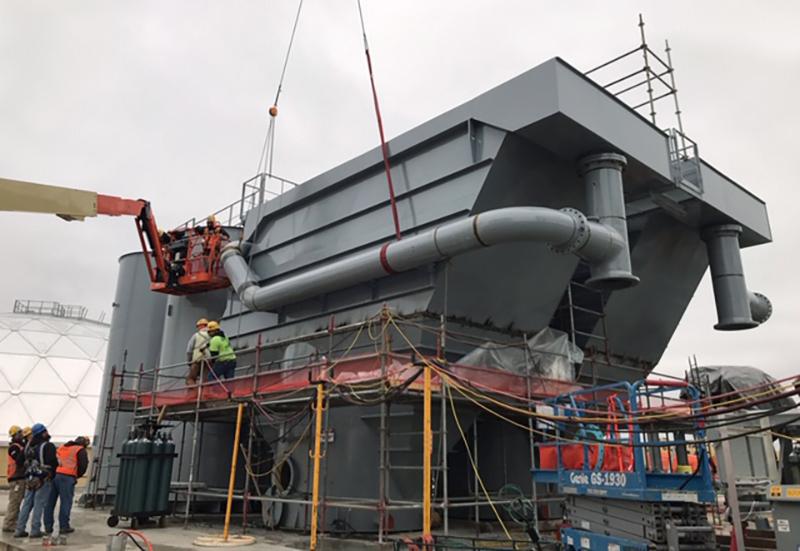
This is likely the most complex stream to treat in the power industry. When water evaporates from the tower, dissolved solids — such as calcium, magnesium, chloride and silica — remain in the recirculating water, with the concentration of these dissolved solids increasing as more water evaporates. If the concentration gets too high, the solids can lead to formation of scale within the cooling tower and potential corrosion issues. This is called the concentration cycle — and more cycles before blowdown result in lower water consumption and less generated water volume. Due to the risk of corrosion and scaling inside the cooling tower, the concentration cycles cannot be increased to infinity.
This is likely the most complex stream to treat in the power industry. When water evaporates from the tower, dissolved solids — such as calcium, magnesium, chloride and silica — remain in the recirculating water, with the concentration of these dissolved solids increasing as more water evaporates. If the concentration gets too high, the solids can lead to formation of scale within the cooling tower and potential corrosion issues. This is called the concentration cycle — and more cycles before blowdown result in lower water consumption and less generated water volume. Due to the risk of corrosion and scaling inside the cooling tower, the concentration cycles cannot be increased to infinity.
This is likely the most complex stream to treat in the power industry. When water evaporates from the tower, dissolved solids — such as calcium, magnesium, chloride and silica — remain in the recirculating water, with the concentration of these dissolved solids increasing as more water evaporates. If the concentration gets too high, the solids can lead to formation of scale within the cooling tower and potential corrosion issues. This is called the concentration cycle — and more cycles before blowdown result in lower water consumption and less generated water volume. Due to the risk of corrosion and scaling inside the cooling tower, the concentration cycles cannot be increased to infinity.
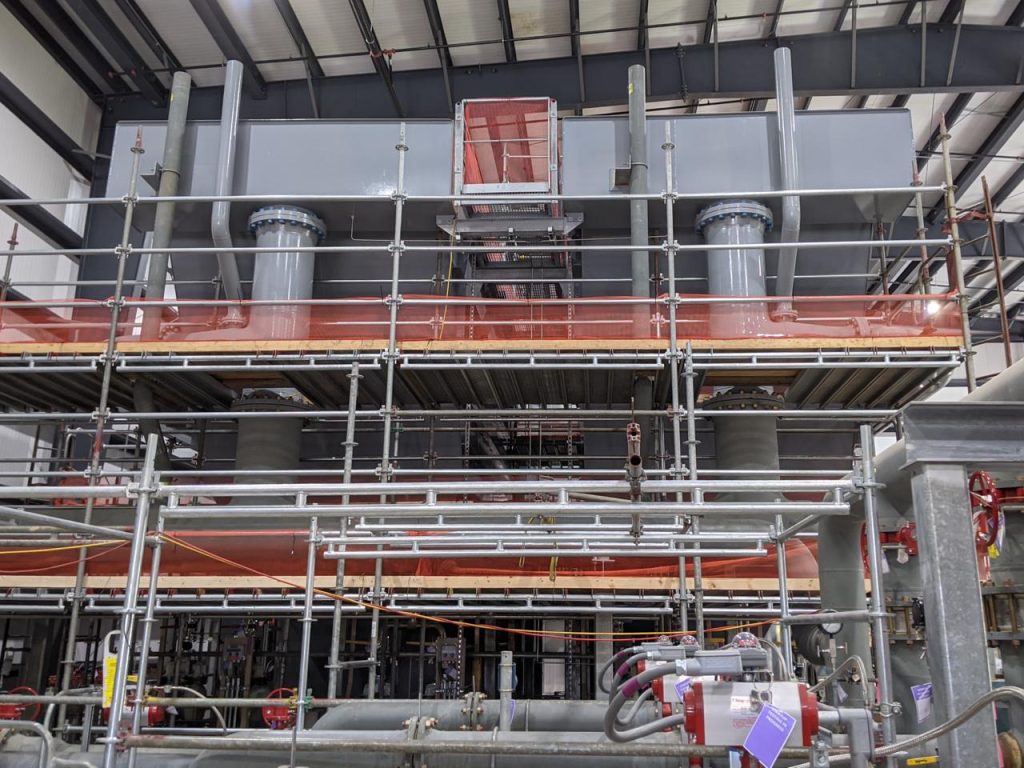
Most power plants relied on surface water for their water needs from 2000 to 2009. Yet, there has been a drop in the use of surface water in the last decade — and an increase of more than 100% in the use of reclaimed water. With a significant increase in the use of advanced water treatment in power — not only due to the need for regulatory compliance, but also due to the decrease in the quality of the feed water — the water chemistry of cooling tower blowdown has become undeniably complex. Treating this stream using conventional systems faces hard-to-manage-challenges, such as high Opex and the inability to reach high recovery.