

-
Eyamin Hossain
- October 21, 2025
- One Comment
Every industrial facility faces the challenge of managing wastewater efficiently while complying with environmental regulations. Selecting the right industrial wastewater treatment system can prevent costly shutdowns, improve operational efficiency, and support sustainability goals.
Quick Overview: To choose the right system, first analyze your wastewater characteristics and regulatory requirements. Compare treatment technologies such as physical, chemical, and biological processes based on contaminants and flow rates. Evaluate providers’ experience, support, and performance guarantees. Partnering with an experienced manufacturer like Hoffland Environmental, Inc. (HEI) ensures a custom-engineered, compliant, and cost-effective solution tailored to your specific industry needs.
This guide guides facility operators through key considerations, technology options, industry-specific challenges, and provides guidance on making a final decision.
Understanding Industrial Wastewater Treatment Systems
Industrial wastewater treatment technology plays a vital role in removing contaminants from process water used across manufacturing and production facilities. Unlike municipal plants, these systems must address pollutants that vary by industry—from heavy metals in plating operations to organic residues in food or pharmaceutical production.
Effective wastewater management safeguards both your business and the environment. It minimizes compliance risks, prevents costly penalties, and can even turn waste streams into sources of recoverable materials. A well-designed treatment solution strengthens operational reliability while supporting your organization’s sustainability goals.
Why Generic Treatment Options Lead to Compliance Risks
Many facility managers make the mistake of looking for one-size-fits-all solutions. The reality is that wastewater from a pharmaceutical plant looks completely different from sewage in a textile factory. Your treatment system must be tailored to your specific contaminants, flow rates, and discharge requirements.
Key Considerations When Investing in an Industrial Wastewater Solution
Selecting the right system requires careful evaluation of several critical factors. Let’s break down each consideration to help you make an informed decision.
Analyze Your Wastewater Characteristics
Before you can choose a treatment system, you need to understand exactly what’s in your wastewater. This means conducting a thorough analysis of your effluent stream.
Start by identifying the primary contaminants. Are you dealing with suspended solids, dissolved chemicals, heavy metals, oils and greases, or biological oxygen demand? Each contaminant type requires different treatment approaches.
Next, measure your flow rates. How much wastewater does your facility generate daily? Does the volume fluctuate throughout the day or across seasons? wastewater treatment systems must be sized appropriately to handle your peak flows without becoming oversized and inefficient during normal operations.
Consider the variability of your wastewater. Some facilities produce consistent effluent, while others experience dramatic changes in composition depending on production schedules. Variable wastewater requires more flexible treatment systems with equalization capabilities.
Know Your Regulatory Requirements
Compliance isn’t optional. Your Wastewater Management Systems must meet all applicable local, state, and federal regulations.
Research your discharge limits carefully. What are the maximum allowable concentrations for specific pollutants? What are the pH requirements? Are there temperature restrictions? These limits will directly influence your treatment technology choices.
Don’t forget about reporting requirements. Many jurisdictions require regular monitoring and reporting of discharge quality. Your system should include appropriate sampling points and may need automated monitoring equipment.
Stay ahead of regulatory trends. Environmental regulations tend to become stricter over time. Choosing wastewater treatment systems with some built-in capacity for future requirements can save you from costly upgrades down the road.
Evaluate Treatment Technologies
Different treatment technologies excel at removing different types of contaminants. Understanding your options helps you select the most effective and economical solution.
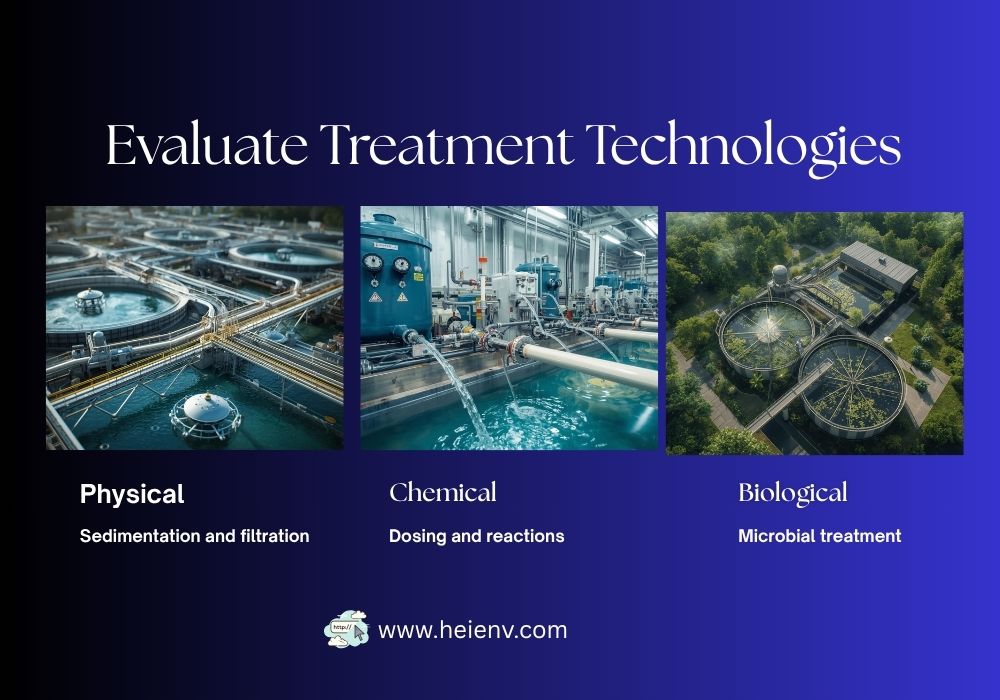
- Physical Treatment Methods: Remove contaminants through physical processes. Screening removes large solids, sedimentation allows particles to settle out, and flotation brings suspended materials to the surface. These methods are often the first step in industrial wastewater systems.
- Chemical Treatment: Uses chemical reactions to neutralize, precipitate, or coagulate contaminants. This approach works well for heavy metals, adjusting pH, and preparing wastewater for biological treatment. Chemical treatment is common in metal finishing, mining, and chemical manufacturing facilities.
- Biological Treatment: Employs microorganisms to break down organic pollutants. Activated sludge systems, sequencing batch reactors, and membrane bioreactors are popular biological treatment options. These systems excel at reducing biochemical oxygen demand and chemical oxygen demand in food processing, pharmaceutical, and petrochemical industries.
Advanced Treatment Technologies: Include membrane filtration, reverse osmosis, ion exchange, and advanced oxidation processes. These sophisticated Wastewater Management Systems handle difficult contaminants and produce high-quality effluent suitable for reuse or discharge to sensitive environments.
Industry-Specific Considerations
A wastewater system tailored for different industries, showing tanks, filters, and control panels in operation.

Different industries face unique wastewater challenges. Here’s how to approach system selection based on your sector.
Manufacturing and Metal Finishing
Metal finishing operations generate wastewater containing heavy metals like chromium, nickel, zinc, and copper. Your Industrial Water Treatment Systems need robust chemical precipitation capabilities, possibly followed by filtration and ion exchange for final polishing.
Consider systems with metal recovery capabilities. Not only do these reduce disposal costs, but they can also generate revenue from recovered materials. Many modern Industrial water Treatment Solutions pay for themselves through metal recovery alone.
Food and Beverage Processing
Food processing wastewater contains high levels of organic matter, oils, greases, and suspended solids. Biological treatment forms the core of most food industry wastewater systems, but preliminary treatment to remove fats, oils, and grease is essential.
Odor control becomes critical in food processing applications. Your wastewater treatment systems should include measures to prevent offensive odors that could impact your facility’s relationship with neighbors and regulators.
Chemical and Pharmaceutical Industries
These industries often deal with complex organic compounds, varying pH levels, and potentially toxic substances. Industrial wastewater systems for chemical facilities typically require multiple treatment stages, including equalization, neutralization, biological treatment, and advanced oxidation.
Batch processing is common in pharmaceutical manufacturing, creating highly variable wastewater streams. Your system needs adequate equalization capacity to smooth out these variations and protect downstream treatment processes.
Textile and Dyeing Operations
Textile wastewater contains dyes, sizing agents, and finishing chemicals that create both color and chemical oxygen demand challenges. Effective wastewater treatment for textiles often combines chemical coagulation, biological treatment, and advanced oxidation to achieve acceptable discharge quality.
Color removal presents a particular challenge. Even trace amounts of dye can be visually apparent, and many regulations include specific color limits. Advanced treatment technologies like activated carbon or ozone oxidation may be necessary.
Operational Considerations for Your Treatment System
Beyond treatment effectiveness, practical operational factors significantly impact your system’s long-term success.
Space Requirements and Footprint
Wastewater treatment systems need room. Assess your available space carefully, considering not just the treatment equipment but also access for maintenance, chemical storage, and sludge handling.
If space is limited, consider compact technologies like membrane bioreactors, which offer smaller footprints than conventional activated sludge systems. Vertical designs and modular systems can also maximize treatment capacity in tight spaces.
Operating Costs and Life Cycle Economics
Look beyond the initial purchase price. The true cost of advanced Industrial Water Treatment includes energy consumption, chemical costs, maintenance requirements, and labor needs.
Energy-efficient systems might cost more upfront but save substantially over their operational life. Similarly, systems requiring minimal chemical addition reduce both operating costs and environmental impact.
Calculate the total cost of ownership over the expected system life, typically 15 to 25 years. This life cycle perspective often reveals that mid-range systems with lower operating costs outperform both budget and premium options.
Maintenance and Reliability
Wastewater treatment systems require regular maintenance to function properly. Choose equipment with a reputation for reliability and readily available spare parts.
Consider your facility’s maintenance capabilities. If you have experienced operators and maintenance staff, you might handle more complex systems. Facilities with limited technical resources should prioritize simpler, more automated wastewater treatment systems.
Downtime can be costly. Look for systems with redundant components or the ability to operate at reduced capacity during maintenance. Some facilities require complete backup systems to ensure continuous treatment capability.
Automation and Monitoring
Modern wastewater treatment systems offer varying levels of automation, from basic on-off controls to sophisticated computerized management systems.
Automated systems reduce labor costs, improve treatment consistency, and quickly respond to upset conditions. They also facilitate regulatory reporting by continuously monitoring effluent quality and maintaining detailed records.
Remote monitoring capabilities allow operators to check system performance from anywhere, receive alerts about problems, and make adjustments without being physically present. This technology proves particularly valuable for facilities operating multiple shifts or remote locations.
Environmental and Sustainability Considerations
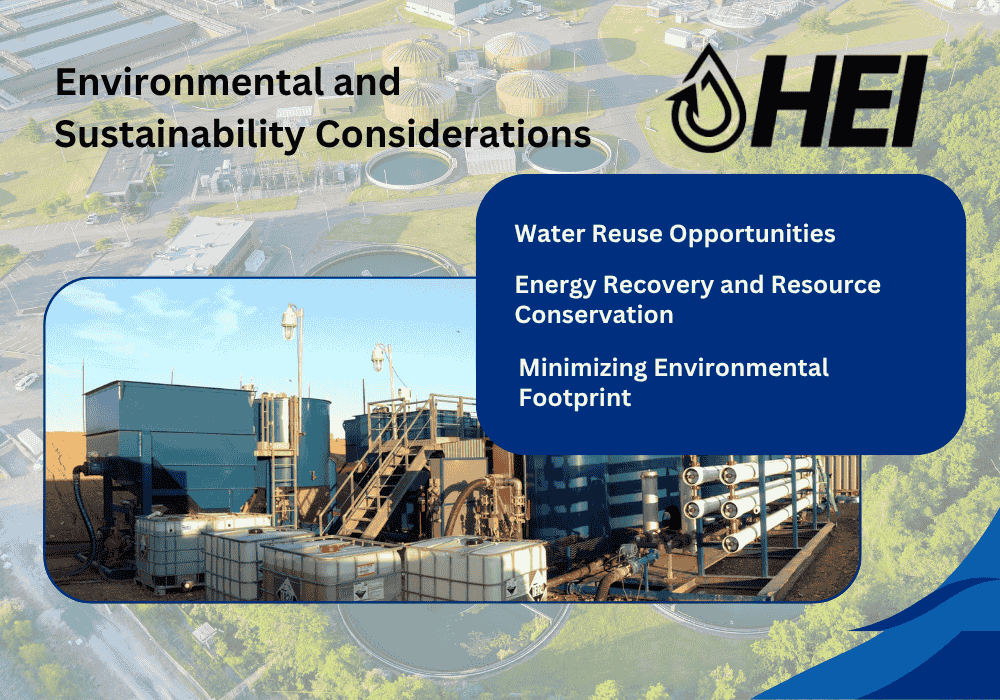
Today’s wastewater treatment systems should do more than just meet minimum compliance standards. They should support your broader environmental and sustainability goals.
Water Reuse Opportunities
Treating wastewater to a standard suitable for reuse conserves fresh water resources and reduces operating costs. Wastewater treatment systems with advanced filtration and disinfection capabilities can produce water quality suitable for cooling towers, process water, or landscape irrigation.
In water-scarce regions, reuse may transition from optional to mandatory. Investing in wastewater systems capable of producing reuse-quality water positions your facility for future success.
Energy Recovery and Resource Conservation
Progressive facilities view wastewater as a resource rather than a waste product. Some wastewater treatment systems can recover energy through anaerobic digestion, producing biogas to offset natural gas purchases.
Heat recovery from warm wastewater streams can reduce heating costs elsewhere in your facility. Metal recovery systems turn pollutants into revenue streams. These resource recovery opportunities improve the return on investment for your treatment system.
Minimizing Environmental Footprint
Beyond treating wastewater, consider the environmental impact of the treatment process itself. Systems with lower energy consumption, minimal chemical usage, and reduced sludge production align with sustainability goals.
Some wastewater treatment systems use entirely biological processes, eliminating chemical addition. Others incorporate renewable energy sources like solar panels to power treatment operations. These features may qualify for green building certifications or environmental awards.
Working with Treatment System Providers
Selecting industrial wastewater treatment systems isn’t something you should do alone. The right provider brings valuable expertise to your project.
What to Look for in a Provider
Experience matters. Look for providers with a proven track record in your specific industry. They’ll understand your unique challenges and have tested solutions ready to implement.
Comprehensive service is essential. The best providers offer everything from initial wastewater characterization through system design, installation, startup, and ongoing support. This integrated approach ensures all components work together seamlessly.
Check references carefully. Talk to other facilities using similar wastewater systems. Ask about system performance, provider responsiveness, and whether the system met expectations.
Questions to Ask Potential Providers
Before selecting a wastewater treatment provider, it is essential to evaluate each provider’s experience, reliability, and long-term support. Asking the right questions helps ensure your investment delivers lasting performance and compliance.
Key questions to consider include:
- Industry experience: What experience do you have with facilities like ours? Can you share case studies or references from similar industries?
- System design and sizing: How do you determine system capacity and safety factors to handle variations in wastewater flow and composition?
- Performance assurance: What guarantees or performance warranties do you offer regarding effluent quality and regulatory compliance?
- Post-installation support: What type of ongoing service do you provide, such as operator training, preventive maintenance, or emergency response?
- System optimization: How do you approach long-term efficiency improvements, technology upgrades, or operational cost reductions?
A reputable and experienced partner like Hoffland Environmental, Inc. (HEI) can provide transparent answers to these questions, supported by decades of field-proven performance and a commitment to customer success.
Making Your Final Decision
Selecting the right wastewater treatment system is a critical step toward ensuring efficiency, compliance, and sustainability in your facility.
- Define your project requirements. Identify wastewater characteristics, treatment goals, available space, budget, and implementation timeline. A clear project specification provides a solid foundation for system design and supplier evaluation.
- Compare qualified providers. Request detailed proposals and assess each option based on treatment technology, equipment quality, energy efficiency, maintenance needs, and long-term service support.
- Consider pilot testing. For complex or variable wastewater, pilot studies confirm performance under real operating conditions and help reduce long-term risk.
- Work with a proven expert. Established in 1978, Hoffland Environmental, Inc. (HEI) designs and manufactures custom-engineered turnkey wastewater treatment systems from its principal facility in Conroe, Texas, USA. With more than 1,000 installations worldwide, HEI provides complete design, fabrication, and ongoing support to ensure each system performs reliably and meets regulatory standards.
A data-driven approach and partnership with an experienced provider like HEI will help your organization achieve consistent treatment performance, cost efficiency, and full environmental compliance.
Frequently Asked Questions?
What is the average cost of systems?
Costs vary widely based on system size and complexity. Small systems start around $50,000, while large-scale industrial wastewater treatment systems can exceed $1 million. The best approach is to request customized quotes based on your specific needs.
How long does installation take?
Typically 3–12 months, depending on system complexity.
Is a permit required?
Yes. Discharge permits are mandatory, and your system must meet specific limits.
How often is maintenance needed?
Routine tasks occur weekly, with full maintenance every few months.
Can systems be upgraded?
Absolutely. Most systems are designed with expansion capabilities. Modular wastewater treatment systems offer the easiest upgrade path as your facility grows or regulations change.
What happens if my system fails to meet discharge standards?
Violations can result in fines and potential shutdowns. Modern wastewater treatment systems include monitoring and alarm systems to alert operators before violations occur.
Selecting the right industrial wastewater treatment system is a strategic decision that impacts compliance, efficiency, and sustainability. For tailored solutions and expert guidance, contact Hoffland Environmental, Inc. (HEI), a trusted partner in advanced wastewater treatment and water reuse systems.
Pingback: How Industrial Wastewater Treatment Systems Work | Complete Guide